- Home
- Start your own stable
- Advertise in Track King
- Help
- 869 active players!!


Track King is a free online horse racing stable management game in which you compete against stables managed by other users all over the world.
As a Track King, you take on the role of Stable Manager - or maybe even a Stable Owner! (See Owners Club). You buy, sell and breed horses, manage jockeys and invest the stable's money in training and veterinary facilities and stud breeding programs. You select Cup and League race entrants from the horses and jockeys in your stable that best suit the conditions and are in top form, plan your tactics before the next race, decide on what training is needed and much, much more.
You can keep yourself continuously updated on the state of your stable by logging on to the Track King website, looking at your race results (or watching the races!) and checking out the latest horses on the transfer market. You can also give your jockeys orders for upcoming races and tell the trainers how the horses will train during the week. Track King has been designed to be as simple - or as difficult - as you want it to be. Just entering a couple of races a week using the invitations on your Stables homepage, and setting a simple training routine for your horses will take less than 15 minutes a week. But if you really want to explore, there's all sorts of stats that you can look into to try and get that extra performance from your steeds.
The best thing about Track King is that there's no 'Game Over'. If your stable goes bankrupt, it's possible to reset (See Finances/Liquidation). And there's also no right or wrong way to play. Just keep trying, experimenting with different parts of the game, and sooner or later you'll hit a good streak of wins in races, or breed a magnificent foal, or train a superb apprentice jockey...each of which will carry you further along the path to being a successful Track King!
GOOD LUCK!!!
To register to become a Track King, use one of the "Start your own stable" links on the Track King logon page. Remember, you can only manage one stable! Opening multiple stables in Track King is not acceptable.
Firstly, you will need to provide some basic details about yourself, and where you live. It is important to tell you that your details will not be given to anyone else - they're just to help confirm your identity to the staff of Track King. The more information you supply, the faster we can get you started, and the more chance we have of preventing cheats or false applications. If you don't provide much personal information, it is likely that you will be contacted by Track King staff to help confirm that you are a genuine applicant.
Next, you will need to choose a Username and password for the game. Your Username is the name that you (as a Manager) will be known by in the game. You can change your username and password at any time when you are registered, but remember - usernames are unique! Once someone has been given a username, nobody else can have it. Regarding passwords, it is good to use passwords that have letters and numbers in them to make it harder for anyone to hack into your account... but make sure it is a password you can remember!
Finally, after giving your personal and logon details, you will be asked to choose a name for the Stable you will manage. Just like with Usernames, the name of your stable can be changed at a later date, but it must be unique. Your Stable Nationality is where you can show national pride, by choosing the country that you want to represent. The flag of this country will be added to your stable, and every horse that is born in your stable will carry this flag. You will also be asked to provide details of the Continent that your stable is currently based in. This will determine the 'physical' location of your stable, and the time of the day that racing starts. Your Continent does not have to be the same as your Nationality - for example, it is quite fine to be an Australian stable racing in Europe. (See Continents)
After you have lodged your registration, most players will get an automated email with a link to register your stable and start playing. If your email was incorrect, or if there are some other complications, then you can expect a reply email within 1-48 hours to let you know that your stable has been registered for you! It's your time to shine!!
After being accepted into the world of Track King, your account will remain open as long as you login at least once every 50 days, or if you are currently a member of the Owners Club. After approximately 3-4 weeks of inactivity, you'll receive an automated Email reminding you that you'll need to return to your stable sometime in order to keep it active. After 50 days of inactivity your stable will be reset completely. Of course, you'll be able to return to Track King in the future, but you'll have to register again.
There is a stable-load of information to learn about Track King! But the basics are quite simple, and you should be able to explore your stable and your horses and enter some races, within no time!
For a quick-fire introduction, check out the FAQ Section of the Rules, and also the Hints and Tips. Have a look around your Stable, and then maybe check out some of the External Sites. Of course, the best place to get detailed information is this Help Guide.... but there's a lot to read!
If you'd like a person to give you some hints and tips and guide you as you find your way, then use the "Get Help" link in the right-hand menu, and a player will be appointed as your personal Mentor, to help you get to grips with things. Alternatively, have a read through the Forums - there is a special forum dedicated to getting helpful advice.
Whichever way you choose, there are plenty of helpful resources to get you started in the world of Track King
There are quite a few different ways to move around in the Track King web site.
There is a 'Main Menu', which appears at the top of the page, just below the Logo.....you know, the menu that you used to get to this page! This menu gives you quick access to:
When you arrive at a page, you'll (hopefully!) notice that the menus on the right hand side of your page have changed to give you a whole load of choices about the page you are currently viewing. These choices are broken down into a couple of different mini menus:
Also, within each page, every horse, jockey, stable, or other name is a link to get more information about that object. Click away!
Objects are also colour coded in Track King, with all Races in Red, all Horses in green, Stables and Jockeys in blue, and Actions and Ratings in yellow/brown. So just waving your mouse over a link or using the 'Tab' key to select it, will hopefully give you a little more information about what sort of object you are looking at.
Your stable diary can be accessed from within the Stables Menu. It shows a running record of all the actions and events that go on in your stable each day.
This provides a valuable tool to catch up on what has happened since you last visited Track King. The diary shows the latest 50 events by default, but you can use the link at the bottom of the list to view older events (if any exist!). The diary also keeps a record of your activity in the Auctions over the past fortnight, showing you all the bids that you placed or received, and also any times that you were outbid. A canny Track King will use this tool to ensure they stay on top of the latest action!
Your Stable diary is only visible to you - so no other Track Kings can see your secrets of success! It displays the date and time that an event took place, gives you a description of the event, and in some cases provides you a link to the event. Where no link is provided, you might be able to guess what caused the event by looking at the date and time.
Some of the things that might appear in your Stable diary are:
You need money to run your stable and to house and train your horses. Each week there is a financial update where the monies owed to you are collected and the monies that you are due to pay debited from your account - all transactions that take place during the week are added to the income/expense account shown and the balance figure is updated accordingly.(See Daily/weekly timetable). So when you look at your stables' finances, the 'Carryover balance' is the amount you started the week with, and all income/expenses listed are then the transactions that will be totalled to create the 'carryover balance' for the next week.
The income you receive comes from:
The expenses you may have to pay are split into:
There's nothing to keep you from spending your stable's money even if your balance is zero. As stable manager you have access to a line of credit at the bank, but you're going to have to pay some heavy interest on this borrowed money. The bank is prepared to allow you free reign on spending until you reach $250,000 debit - but after that things start to get tight. You'll still be allowed entry into league races, and to hire unlisted apprentice jockeys, and to auction your horses, but that's about the extent of it. You won't be able to resize your stable facilities, or purchase any new horses, and signing a new jockey contract is right out! Also, and most importantly, your bank will put a stop on any staff drawing a wage from your stables' funds once a 'closing balance' of -$250k has been registered. This means that your vets and trainers will be unpaid! They're prepared to ride it out for a week due to sheer loyalty to you, but at the start of the second week without pay they will all walk out, leaving you with zero training and vet capacity. Note that while Trainers are working for free, you cannot sell any Training to the public, so you might as well use it while you can! The bank will then continue to finance your stable, even if the debt continues to grow, but you'll be without those valuable stable hands.
Should you grow tired of being broke, your Stable Finances page will offer a "Liquidate stable" link for anyone who has closed the week at -$250k. This process is not reversable! If you enter liquidation, your stable will effectively be reset to a 'new' stable, with 4 completely novice horses and minimum sized agistment. You will still be in the same Class as you were before, but you might find it hard to remain competitive!
At the end of every season the sponsors hand out a bonus if your stable has done well enough. Trophies and money are handed out to the top 5 places in each racing Class. How much depends on your place and how high up you are in the league system:
| Class | 1st | 2nd | 3rd | 4th | 5th |
|---|---|---|---|---|---|
| 1 | $1,200,000 | $1,020,000 | $840,000 | $660,000 | $480,000 |
| 2 | $1,000,000 | $850,000 | $700,000 | $550,000 | $400,000 |
| 3 | $800,000 | $680,000 | $560,000 | $440,000 | $320,000 |
| 4 | $600,000 | $510,000 | $420,000 | $330,000 | $240,000 |
| 5 | $400,000 | $340,000 | $280,000 | $220,000 | $160,000 |
| 6 | $200,000 | $170,000 | $140,000 | $110,000 | $80,000 |
70% of the League Bonus is paid at the end of the season, and the other 30% is paid on accepting promotion to a higher league. As an additional bonus all stables that promote will be given a FREE week of Owners Club!!
Your personal finances are totally separate to your Stable Finances. This money is your personal money, as a manager of a Stable, to use however you see fit.
As you don't have a team of Administrative assistants looking after this money, you won't earn any interest on it - so you may as well spend it! And what better way to spend it than at the track, betting on the horses that you know best?! (See Betting)
During the off-season, each Owner will have the opportunity to donate up to 10% of their Personal Finances - to a maximum of $500k - to their Stable. Of course, a stable that accepts charity like this would no doubt have to expect a loss of prestige...but it does provide another way to utilise your Personal Finances if your stable struggles. These donations can only be made once a season, during the Promotion/Relegation window.
Clearly horses are your stables main asset! You must have a minimum of 4 horses in your stable at all times.
Each horse has attributes and skills that determine their overall racing ability, while there are also some additional factors that will affect their performance in different race situations. The horses also have an 'Overall Rating' which is a quick way to compare horses, as well as having experience at different Distances and Track Conditions.
It's your job to consider the strengths and weaknesses of your horse, and decide which horse is best for each event. Each attribute of the horse will affect it in different ways - as will the balance between each attribute.
Aside from racing your horses, you'll also need to take care of their training needs and their veterinary care to make sure you always get the most out of them. (See Vet services, and also Training). After racing and training you'll notice the physical condition of the horse will decrease. Medical condition decreasing is often a sign that your horse has picked up an injury - in races, this is reported in the Form Guide after the race.
If your horse is getting repeatedly injured, or if your horse has a lower 'Vet Assessment' than you would expect, then maybe you might consider giving your horse a spell (rest) to allow the horse time to heal naturally? This can be a very effective tool to continue to get the best from your horses.
Injury Profiling, commonly referred to as IP, is a measure of how likely your horse is to sustain an injury next time it races or trains. There is no direct display of this stat, but you can estimate this by looking at the Vet Assessment. If it seems much lower than the average of Medical/Physical condition, then the horse is at a high risk of injury from being too active recently, or because of a recent injury that might be made worse. The best way to help your horse recover if it has a poor Vet Assessment is to give it a spell, or in other words, a short rest from racing. A spell of 3-4 weeks is enough for any horse to recover, but your horse might not need that much of a rest? It's your decision!
Some General Guidelines for Injury Profiling
As you'll notice, a horses week can get very busy! Be sure to keep an eye on the Upcoming Schedule for each of your horses, to make sure that they don't have any conflicts. Where there is a conflict in schedule, the horse will simply take the earliest thing that you have told it to do and go with it - even if that means missing out on training or missing out on a race, or even missing travel arrangements to another track. Of course, if a horse misses its travel, it might not make the next race or get home in time for training etc.....so it can have quite a big flow-on effect. Any Schedule conflicts are highlighted in the horses' Upcoming Schedule, so they shouldn't be hard to notice! If you see any, you can remove the conflicting item/s by going into the "Schedule & Transport" page for that horse, and cancelling them directly from the schedule.
It's also possible to rename your 2yo horses, any 3yo's that were bought within the past 3 weeks, or any horses with career earnings of less than $1,000,000. It costs 1 'Game Credit' for each time you want to rename a horse. The number of Game Credits you have is displayed on the 'Home' page, and Game Credits can be bought through the Shop, or are provided free with purchases of Owners Club (See Owners Club). To rename a horse, simply select the colt/filly that you want to rename, and then select the Rename a Horse link from the Page Menu. A member of staff from Track King will approve or reject the renaming as appropriate within 24-48 hours at most!
And finally, the great circle of life! Each season, on the first day of January/April/July/October, horses will be considered as one year older - regardless of their actual date of birth. As a general rule, horses may only race from the age of 2yo (3yo for league races) up to and including 10yo. After 10yo, stallions may continue to be used for Stud until (and including) the age of 12yo. After age 12yo (or age 10yo for geldings or mares), there isn't really anything useful for your horses to do around your stable, although a mare will still give birth to a foal as an 11yo provided she was serviced before her 11th birthday. It might break your heart to part with these virtual champions, but in the interest of your stable it should probably be done. You can either organise to give them away, or if you are an Owners Club member you can retire them into the Hall of Fame, so that we can all look back at their stats and achievements. (See Owners Club)
Jockeys are the ones responsible for getting the best out of your horse in race. Track King features a form of Artificial Intelligence for the jockeys, allowing them to actually make decisions about how to respond to different situations that they might find themselves in during a race. (See The Race!) It's fair to say that the horses are just the engine, and the jockeys are the drivers.
As you might expect, there are good jockeys and not-as-good jockeys. All of them make decisions to the best of their ability, and sometimes those decisions might be ideal for the horse and race situation. As a general rule, the higher a jockeys' base salary, the higher his potential to make good choices. It's up to you, as an astute Stable Manager, to research the jockeys and find out a bit about them. You can check their career stats to get an idea of what type of track and distance they are most experienced at. Also keep an eye out for their riding style, which shows the things that are most important to that jockey. Watching some of their old races to see how they handled different race situations is often handy to see whether you think they might be suitable for your horses. (See Owners Club)
When jockeys use their Artificial Intelligence to make decisions, they consider the following things - although each jockey has their own ideas about which are most important (as shown in their Racing Style).
Of course, in a race, they jockey does also consider your wishes. You have the opportunity to enter Race Instructions for each of your horses, which will be followed (to a degree!) by every jockey that rides the horse - even apprentices.
During the race, the jockey continually assesses their surroundings, making several "mini-decisions" using their 'riding styles' which all fall into the categories above.. Each one of those mini-decisions are then combined, to try and find which instruction they should give the horse that will satisfy as many of their 'styles' as possible. (See The Race for an example of how a Jockey assesses their surroundings)
Jockeys like to feel good about themselves, and their morale influences how well they will communicate with the horse during a race - and how much attention they pay when you give race instructions for your horse! To keep a jockey feeling good, it's important to allow them many opportunities to race. It's also important to give them a good chance at winning. If you keep putting them on the old gray mare that ain't what she used to be...well....the jockey isn't likely to stay happy long! Jockey morale will start at a higher level if you don't drive their wage down at the start of a contract - it costs more but it could well be worth it?
There are 3 different 'grades' of jockey in Track King:
Contracted jockeys are the 'real deal' - the main sort of jockey you'll find in Track King. They have a name, and can be contracted to many different stables over their career, and will age by one year on the first day of January/April/July/October, just like the horses!
To contract a new jockey to your stable, follow the link named 'Hire a jockey' from the right-hand Page Menu of any 'Stable' page. You will then be able to search the pool of jockeys in Track King, and select from those that would be prepared to race for your Stable (based on the prestige of your stable!), and from there it's just a matter of picking the one you want and organising a contract. Bear in mind that you may only hire jockeys of your own Race Class, and within about 5-6 levels of Prestige to your stable. For example, a highly prestigious jockey is not going to want to negotiate with a 'lowly' stable with a lot lower prestige. The jockey may agree to negotiate with stables of slightly lower prestige, but you can be sure they won't accept much haggling! Negotiate carefully - you can only complete one set of jockey negotiations every 24 hours - whether you managed to successfully sign the jockey or not. Keep an eye on the status of negotiations with the jockey to get an idea how far you can drive their wage down! As a general rule, a jockey with more prestige than your stable are more likely to treat you harshly.
While a jockey is signed to your stable, they are not available to race for any other stable, and will draw a wage from you (in advance) once every week excepting the last week of their contract. On completion of their contract, they will go On Holiday for an indeterminate period - maybe a day, maybe a week....maybe longer?! When they leave your stable, if they're inclined to race with you again, they'll give you an idea of when they intend to return. The better their morale at the termination of the contract, the more likely that they'll make sure they are back on time!
If a jockey employed by your stable has less than 28 days remaining on their contract and you are a member of the Owners Club (See Owners Club), you can negotiate to end the contract early. The jockey will tell you the amount that they want to be paid to finish their contract early, and then it's all up to you! It's not a very prestigious thing to be firing jockeys though...
The Conference Room Specialist Facility will make it possible to attempt to negotiate to extend the jockeys' contract as it epproaches the final few weeks - although the jockey is likely to be asking for a wage increase!
Jockeys will retire from racing on their 33rd birthday, and will only compete in races of their own Class - which means that generally the jockeys available to the "Upper Classes" (sic!) are better than those of the lower. There will be some exceptions - can you find a bargain?!
A Stable Apprentice is basically a jockey in training, and can be identified by the '(A)' to the right of their name. Each stable can have up to 2 Stable Apprentices in the stable at any time. To hire a stable apprentice, go to the "Hire a jockey" page, as described above with a real jockey. At the top of that page is the link to hire a Stable Apprentice.
Hiring a Stable Apprentice is done through an independent agency called the Jockey Recruitment Agency. When you visit, they'll ask how many candidates you would like to interview. You pay them a flat fee per candidate just to interview them, and can then choose which of the candidates you want to recruit. These candidates will be aged 19-22 years old, and have a few basic differences. It's up to you to pick which one looks the most likely prospect for your stable.
Once you recruit a Stable Apprentice, they must remain an apprentice in your stable for a minimum of 4 weeks, and up to a year (4 seasons) from the date they are recruited. It is totally your decision about when they should be granted their full jockey license.
Each week that the Stable Apprentice remains in your stable they will earn 5 'training credits' (more if you have the Apprentice Classroom Specialist Facility), which you may spend on improving their skills and experience, which will in turn improve their prestige. Stable Apprentices will also earn some extra Training Credits for each race in which they can beat AT LEAST 4 other opponents. Of course, they'll also earn experience and have morale just like a normal jockey. You can apply any Training Credits that your apprentice has earned at any time, and see the results immediately.
When training an Apprentice using the Training Credits they have earned, think carefully. Imagine that the levels of each stat are an indication of "how carefully" the jockey should consider it. You should have a definite plan of what things you want this jockey to pay attention to most of all. If you simply add training credits to make all of the skills the maximum, then the jockey is very likely to get confused, because everything going on around them is important, and so they won't be able to think clearly and plan a strategy. If the jockey has only a couple of "main" skills, then at least they (and you!) will know what is most important and therefore have an idea of how they will react. (See The Race for more information on Riding Considerations and how they apply to a race)
While they are an apprentice, you cannot expect them to perform as well as if they were a fully licensed jockey - they're still learning. However once you grant them a full license, they'll suddenly improve and realise their hidden potential and go on to be the best they can be. And in thanks for your help and nurturing they will return 10-15% of their wages to you any time they are contracted by a stable! On top of that, you will also gain prestige for your stable based on the length & success of their apprenticeship.
When you grant a Stable Apprentice their full jockey license (after at least 4 weeks, or automatically after a year), you can choose which Race Class of license you will give them, which they may improve on over their career. Of course, they will charge a higher weekly wage in the higher Classes, but maybe there will be a bigger demand for their services in the lower Classes? Gauge their prestige against the available jockeys of similar prestige in each racing class to decide where they are likely to be hired the most - therefore returning a more regularly wage to you!!
After you have promoted an Apprentice, they will make themselves available for you to hire at a greatly reduced rate - yet another benefit for your training them!
Every track in the world of Track King has a swag of unknown Apprentice jockeys who are just dying to get a ride. They don't charge much comparatively....but then they don't have any experience, and only limited ability! If for any reason one of your contracted jockeys can't make it to a race, an apprentice will step in automatically to ride for you, and will charge you for his services at the end of the day.
Apprentices, being the dumbest of all jockeys, should probably be prevented from riding in any races that you really want to excel in! One day, maybe one of these youngsters will be a candidate for someone as a Stable Apprentice....who knows. Hardly likely though!
You pay agistment fees each week to house and feed your stable of horses, and pay one-off expenses to make room for more horses (or to remove a stall). Your stable can physically hold up to 30 stalls. Increasing or reducing the capacity of your stables enables you to house and feed more/less horses successfully. It is possible to crowd more horses into your stable than there are stalls, however this is almost certainly going to lead to a massive loss of your horses condition. After all, if you want a high-performance horse you'll need to provide for it in a professional manner!
The costs to maintain the stall and to increase/reduce capacity is determined by your stables racing class - the higher your class, the higher the cost to resize and maintain these facilities. Top class horses need top class care! No matter which class you are in, the first 4 stables will be provided free by the sponsors of your stable, with no ongoing cost to your Stable finances each week.
Some of the unused stalls in the stable (as determined at Financial updates on Sunday evening) will be leased to the public, earning you income. The amount of stalls you can lease to the public is determined by your stable's prestige level and the number of administrative assistants on your staff at the time. The better your prestige, the more demand there will be to agist with you. The more administrative assistants you have the better your staff will be able to cope with collecting payments for these services. (See Administrative staff)
Administrative assistants manage the office at your stable, taking care of some of the day-to-day financial aspects of owning a stable. If you have many debts or many funds available, you can hire an administrative assistant to reduce your interest rates, or find the best investment for your bank account. Administrative assistants can be found on the 'Stable facilities and training' page.
Administrative assistant functions include:
You'll need to pay a one-time fee to hire or fire Administrative assistants. On top of this, they are paid a wage each week - the amount adminsitrative assistants demand to hire/fire, and also for their weekly services and is determined by your racing class level.
To train a horse, first you must have Training capacity available. You can do this by hiring a trainer (an hour at a time) to come and work with your stable on the 'Stable facilities and training' page. Any training hours that you do not use during the week may potentially be sold on (possibly at a profit!) to the public, with the amount of hours that can be sold depending on the number of Administrative assistants you have employed. (See Administrative assistants)
Once you have training capacity to suit your needs, you can begin to Schedule the training of your horse. Pick a training type for any horses that you want to train, assign a trainer for however many hours that you require, and then apply the training. If this has been successful, a confirmation message will be displayed to tell you when the training will take place, and the training will be entered into the horses' Upcoming Schedule. Your horse will continue with this training program each week until you change it, unless your horse misses a training session due to a Schedule conflict. Of course, the horse will be busy training from the start of training time, for however many hours you have asked it to train. Make sure that training doesn't interfere with any other commitments!
Your trainer/s flatly refuses to travel - probably because of how difficult it is to move the training equipment from one location to another?! Whatever the reason, for a training session to happen your horse will need to be located at your stable at the appointed training time. You can double check that everything is OK by looking at the Upcoming Schedule for that horse. Schedule conflicts will be highlighted so you shouldn't miss any that may appear.
Different training activities will have different outcomes for your horse, but one thing is for certain - it takes time and effort to see the changes in your horse. Practice makes perfect! The results of your training will be seen each week at the designated Training Time for your race Class (see Daily/Weekly Schedule). Training rises are shown in blue, and training drops are shown in red.
Trainers often have more trouble training highly skilled horses, so it will take more time with the trainer to see the results of training on your champion thoroughbred than it will with your young unskilled prodigy. No matter the skill of the horse, the longer the horse spends training, the more the horse loses interest. Short sharp training sessions are more effective (hour for hour) than long drawn out sessions... and there's an upper limit of 12 hours training per week on any individual horse. Some training types are also affected by various Specialist Facilities - some for better and some for worse! (See Specialist Facilities)
Following is a quick description of the training types available, and how they affect your horse:
Just like Trainers, Vets operate on a schedule. They work 5 days a week, taking Mondays and Fridays off so they don't get in the way of Training. (See Daily/Weekly timetable)
Vets are useful to help speed up the natural recovery process, helping your horses regain their physical and medical condition after a big race or a taxing training session.
Again, just like Trainers, before you can give your horses the veterinary attention they need, you'll need to first have some spare Vet capacity. You can hire Vet Services (an hour at a time) to come and work with your stable on the 'Stable facilities and training' page. Unlike trainers though, any excess time that the Vet has while at your stable will not be sold on for use by the public - so only hire the vet for as many hours as you think you will need!
Once you have some spare vet capacity, it can be assigned in blocks of one hour to your horses on the 'Stable facilities and training' page. This page will also show you the time and date that the vet is going to come visiting. As you might expect, this time and date is also recorded in the horses' Upcoming Schedule. Once a vet schedule has been successfully arranged, the vet will continue to come and see your horse/s for the same amount of time each day in the vets' working week - not stopping until you either make changes to the schedule, or until the horse fails to keep a veterinary appointment.
If you have the Enhanced Vet Centre Specialist Facility, then during the nightly Scheduling process (approx 00:00), any unused vet capacity is automatically assigned to the horses in the worst medical condition.
Remember that the horse will be busy with the vet for however many hours you have assigned, so be sure the horse isn't booked with the vet for so long that it misses out on something else like Race Preparation!
Horse racing is an exhilarating sport, and it's no different here at Track King!
There are 3 different types of races within the game:
These contests are held over varying distances, categorised as follows:
League races will always consist of one race of each distance type, while Stakes and Cup races may cover longer distances. The exact race distance changes regularly to ensure all horses have the same opportunity to prosper over time. It's up to you to select the right combination of race distance, jockey, horse, race instructions and opposition to give your horse the best shot at winning! (See Entering a Race)
Some races will have eligibility criteria in place that your horse will need to meet, such as gender or age restrictions, or that the parent stable must be racing to an appropriate local Track or Region. You'll need to check the eligibility criteria of the race you want to enter to be sure. Class races will only impose loose restrictions - namely that you must be part of that Racing Class at that Track, and that the horse must be between 3 and 10 years old. The eligibility criteria are:
In order for your horse to be able to race, it must of course be located at the appropriate track at the designated race time, and it must also have completed 3 hours of Race Preparation immediately prior to the race. Never fear, this preparation will be booked in for you automatically when you enter a race - you just need to make sure your horse can get there!
Please note, horses that are at physical or medical condition of 5-Drained or lower 1 hour prior to commencement of any racing will be scratched from the event. Any bets previously made on these runners will be refunded by bookies, as is standard for scratchings.
At the end of the Race Meet (See Continents), prestige, purses, and Class league placings are all updated. Horses placed in the Top 5 will share the purse, while prestige is awarded to the top 7 runners - of course, the higher you place and the more 'real jockeys' in the race, the better the reward!
There are so many races available to enter in Track King - Stakes races twice a week, Class League racing, plus many Cups during the season. The big question is - which races will you enter, and which will you decide to miss? A stable would need to be very large to compete on all fronts...but be warned, the cost of maintaining a large stable is quite high!
You can find H.O.O.F Instant Racing in the Races menu. Races are run every 10 minutes, so keep an eye out for challenges, or make your own! If you are an Owners Club member, you'll receive alerts for every HOOF race that is available.
The winners of HOOF races may get an experience boost for their horse. To qualify, there must be at least 3 runners in the race.The more runners, the more experience up for grabs, with 8 runners guaranteeing that the winner earns experience.
For a small cost, you can take any of your own horses to the Training Track, using the banner link on the Home page.
The Training Track is the perfect way to experiment with various jockey instructions and horse/jockey combinations. Of course there's no race purse to be won, but the bonus is some instant knowledge about your horse - and a little bit of experience to boot!
Also located at the Training Track is the 'Arcade Mile', which is an arcade game featuring your very own horses! If you manage to place in the Top 3 for any of the skill levels, you will earn yourself a trophy which you hold until someone beats your score!
Your Local track is the home of your stable (and many others), and is the venue for your weekly Class league races. (See Class Races) Up to 150 human-owned stables can call each track home, with 25 stables competing against one another in each of the 6 classes of racing at each track. On entering Track King as a Stable Manager, your stable will have been assigned to a Local track.
Local Tracks have a Prestige Rating, which is a guide to how many players reside at that Track in Class 1,2 or 3. The higher the Prestige level for a Track, the more likely that Track is to schedule a Local Cup Day.
At the end of each 11-week racing season, and prior to the start of the next racing season, you'll have the opportunity to relocate to any other Local track in the world that has an opening at your Class level. If you are moving to a track of lower Prestige Rating, there will be a cost associated with the move. (See the end of section Class Races)
The track is also home to a resident tipster, an virtual equine expert who doesn't mind a bet or two - sometimes he'll offer his choices for race favouritism in the betting stakes. Check each individual race page before the event to check his early mail! Maybe he knows something you don't?
Weather
Each track has it's own weather, which is updated every day. On each Track page you can see what the weather is like today, and a weather forecast for the next 7 days. As we all know, the weather forecast isn't always entirely accurate, but they get it right quite often. The weather isn't selected completely at random every day. It's connected to what the weather was like the day before. If there was rain today, there's a greater probability of rain tomorrow as well, compared to other types of weather.
The chances are exactly the same for rain, sunshine or anything else regardless of which track you choose. No tracks have better weather than others. You may also notice that each continent has its' own "Weather patterns", with each real-time month marking the start of a new Weather pattern. Pay a little attention and over time you may be able to predict where the wet and dry tracks are likely to be at any time of the year. There are three different Weather patterns - Hot, Wet, and Average - and they always follow each other in that order. The only thing that isn't known is which of those Weather Patterns that each Continent will start with at the beginning of each new racing season.
The weather affects track conditions, which in turn affects the performance of your horses and jockeys on race day. To be a truly successful Track King, you'll need to be able to predict how the track will respond to the coming weather so that you can be sure to enter your horse into races where the track condition is likely to suit your steed.
Track condition
As most horse trainers and keen punters know, a stretch of hot sunny weather or a spell of rainy days can really affect the condition of a racetrack. The horse racing tracks in the game reflect this, with subtle changes the result from the weather conditions.
Some horses perform better in heavy going, some horses prefer faster track conditions. Some horse skills are more useful on heavier or drier tracks, and some qualities of a horse are consumed faster in heavier conditions than on good and fast tracks.
Track conditions (from fastest to slowest)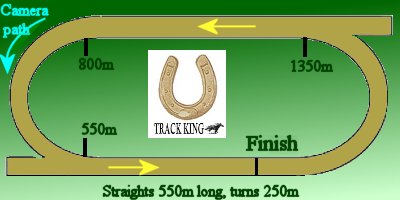
Each continent within Track King contains one or more regions.
There is no difference between the regions within a continent - they are all equal and experience similar racing conditions over time, as well as similar Cup competitions. Additional regions may be added to a continent if the existing regions have reached their capacity.
Regional tracks are only used for Cup racing. Each Regional track is the 'hub' for 15 Local tracks, with each Local track hosting 150 stables that participate throughout the 6 different racing classes. (See Tracks and weather)
Although the other stable managers at your local track are your direct opponents, don't forget that you may sometimes need to band together as track representatives to compete against other tracks - or even other regions or continents - in very prestigious Cup competitions. After all, when a horse makes a name for itself on the big stage, the punters and media are bound to want to know about the place it came from.
There are five (5) continents represented in Track King.
The main difference between the continents within the game is the cutoff and start/end times of races:
Your horses are able to travel to other continents to participate in Stakes and Cup races, however there is a small transport cost associated. (See Travelling)
If racing times in another continent are more convenient for you, you are free to move your stable to any local track in that continent that has a vacancy. Moves can be made during the break between the end of the 11 week Class racing season and the start of the next Class racing season. (See Tracks and weather)
There are 6 classes of racing in Track King - from the dizzying heights of Class 1 racing down to the less glamourous gallopers of Class 6.
Your stable's racing class represents your racing 'league' at your local track, and the group of direct opponents you'll be racing against to get promoted to the class above. In Class league races, you will only compete against other stables located at your track in the same racing class as your stable. Your stable can occassionally race against stables in a higher/lower class, but only in Stakes and Cup races.
Class league races are held during the week, depending on which racing class your stable is in:
Race entrants (horses and jockeys) must be nominated before 23:00 on the day prior to the race. You may withdraw (scratch) your horse from a race voluntarily up to 1hr prior to the start of the racing in that continent. (See Continents)
There are 25 stables per racing class at each track, competing over the course of 11 Race Days in a fixed 3-month season. The seasons in Track King happen within the following months, with the first week of racing starting from the first Monday of the month:
Week 1 of racing within each Class will begin from the first Monday of the opening month. For example, in the January to March season of 2008, the first Class 1 Race Day will be on Tuesday the 8th of January, as the first Monday of the month was on the 7th of January.
For each of the 11 weeks of the season, you will be offered the opportunity to enter into two of the 4 Class League races (one for each of the 'common' distance categories) for your Race Class at your Local Track. These invitations will be presented to you on your Stable page in the section titled 'Important Information and Events'. Alternatively, you can look at your Invitations in the Races Homepage and enter from there. However you do it, don't leave it too late to enter, as your choices of which race to enter will become more limited as other horses enter. Class League races are restricted to a maximum of 15 horses in the field.
Where leagues have 18 real players or more, a 5th race (Epic) is scheduled on alternate weeks starting on week 1. For these weeks the maximum number of entries per race drops to 13 instead of 15 per race.
On completion of each Class League race meet all runners will receive a payment for competing, based on the following formula:
Automatic League Entry payment = (7 - Racing Class) x $5000, scaled based on the number of Named Jockeys in the race
This automatic payment means there is a clear incentive to compete in your League Races each week.
League Points are also awarded to the horses that competed based on their finishing order. These points are then tallied up to work out the stables' standing within the Class League Table. Points will be awarded as follows:
Tiebreakers: Where the total points earned is equal between Stables, league position is decided by the number of 1st place finishes, then 2nd places and so on, down to the number of races competed. If everything else is equal, then the stable which held the lead on the table the week prior will continue in the higher position. In the event of a tie for any position after the last round of the season, league position will be determined by the stable which had their horse finish in the highest position in the longest distance Week 11 race contested by either/both of the tied stables.
At the end of the 11 week Class League season, prizemoney will be awarded (See Finances), the top stable of each Class (except Class 1!) will automatically promote to a higher racing class where prestige, race purses, and often stakes are higher and the competition is tougher. The 2nd to 5th placed stables of each Class will be given an offer to promote to a higher Class if they wish. If this offer is not accepted within 5 days of the season end, then the offer to promote will be withdrawn. So, if you have an unsuccessful racing season and finish in the bottom five positions of your League, don't despair! There's always a chance that the people racing in the Class below you might not take up the offer to promote, and you'll hang on to your prestige!
At the end of the season, aside from prizemoney being paid, all stables will have a small window of opportunity to relocate from one Local Track to another.
At the start of Week 0 of each new season, the officials in charge of each League Track will pay a "Competitive League bonus" to all players in C1-C3 Leagues where there are 8 or more human opponents. This bonus is between $32,000 and $900,000 - scaled depending on the Racing Class, and the numbers of human opponents in that Class.
Cup races are more prestigious than other races within Track King, as entry is via invitation only! If you are qualified for a forthcoming Cup race, the invitation will appear on your Stable page, and any races that you are qualified for will become visible when you enter your horse into a race. (See Entering a Race)
There are a variety of different Cup competitions that are run throughout the course of a season. Some of the more regular Cup styles are:
Cup races are generally held at Regional tracks (See Regions), which means that you're very likely to need to book travel. Don't leave your travel bookings until the last minute! In many cases all Regional tracks across the world will play host to an equivalent Cup - some being more prestigious than others, and some offering a larger race purse, or demanding higher stakes to enter. Check out the description of any Cups you are invited to - there may be a good alternative away from your Regional track....although bear in mind that travel times will be longer!
Cup races are held on weekends - Saturday and Sunday - throughout the racing season. Race entrants (horses and jockeys) must be nominated by 23:00 on the day prior to the race time. You may withdraw (scratch) your horse from a race voluntarily up to 1hr prior to the start of the racing in that continent. (See Continents)
When working out which Stables have earned entry to the following round, all results are sorted by:
If you check the Information about the Cup (you'll find a link from every Cup race to the Cup Information pages, as well as a link from your Races homepage, and also a "Cup info" link from the Home page), you'll notice a table detailing how many runners/races there will be at each Round of the Cup. With that information in your possession, you can then calculate whether your Stable has made the cut to get through! Of course, if you wait until after Race Meets on the Sunday in your Continent, you'll know for certain as the invitations will arrive within an hour of the end of the racing day....but if you're inclined to work it out yourself, the following example may help.
Example: Round 1 of a Cup event has a maximum of 75 runners, spread over 3 races of 25. Round 2 of a Cup features 25 runners total, in one race, as follows:
On completion of Round 1, the 25 places would be awarded as follows:
Of course, quite often there are more races and more variation of race distance to sort through, but the same basic principles apply. Hope that helps!
So the big day has come and gone, and the big question of course is 'Where's my shiny trophy?!'. The results of Cup racing are updated as follows:
Cup Finals also offer a special bonus to all entrants that finish inside the top half of the field. These runners will also receive a payment equal to 5% of the total race purse. This payment will be made during Trophy presentations.
Community Cups are a chance for the Track King Community to help build their own racing calendar! A Community Cup can be "proposed" by any individual player for a fee in Game Credits. Then, the "proposed cup" is made visible to everyone, allowing the community to donate Game Credits to support the idea. You can see a list of who proposed the Cup, and also a list of who has donated towards it presented near the heading of the Cups description page.
Once enough credits have been received then this Cup is scheduled! On a Thursday night at 22:00, any Community Cups that have received enough support are automatically scheduled to take place for the weekend beginning in 30 days time, and Invitations will be available as per the standard Cup processes.
After a Community Cup has begun, it will again open for Support from the general public, so that it can be re-run every season if you like!
Rivalry Cups are a special form of Community Cup, where all stables from two Local Tracks are invited to compete at a neutral venue in an elimination Cup. Aside from the winning stable getting their personal glory, there is also an award for the winning Track. The winning Track is the one that has the highest total number of placings in the Top 5 over every race of the series. No extra score is given for 1st or 2nd - all placings are equal. Every stable from the winning Track that competed at least once in that Cup series will receive a bonus payment equal to 25% of the final race purse! In the unlikely event of a tie, then all competing stables will receive a bonus payment equal to 5% of the final race purse.
Starting in 2011, Local and Regional Tracks with sufficient populations will have several Local Cup Days throughout the Season. These events will be arranged at the start of Week 0, for the season ahead, and will be advertised to all Stables at the local tracks. Details of Local Cup Days can be seen on the Track page.
Local Cup Days will be held based on Local Track Prestige Rankings as follows:
Stakes races and Invitational races are 'friendly' races, some created by unowned stables and some created by other Track Kings like yourself. You can use these races to hone your horse's skills or to test your horses against those from other stables in a little bit of friendly competition. There is little or no prestige for this racing type - especially when racing at your own track - but the racing is just as exciting and you may get to learn more about your horse and jockey, track conditions, and other Track Kings from across the globe, under differing race conditions. And of course, there's the purse!
Stakes racing occurs on Mondays and Fridays during the racing season. Race entrants (horses and jockeys) must be nominated by 23:00 on the day prior to the race time. Don't forget, if you're travelling to another track to compete in a Stakes race, you will need to make your travel booking the day before race entry cuts off at the latest - check the Schedule and Transport page for your horse to get a quote on how long the travel will take, and plan ahead!. You may withdraw (scratch) your horse from a race voluntarily up to 1hr prior to the start of the racing in that continent, although beware, entry stakes are not refunded. (See Continents)
Anyone can compete in a Stakes race, but they can only be created by Owners Club members (See Owners Club). Stakes races can be held at any track on any Monday or Friday. If you create a Stakes race, you offer up the purse out of your own Stable Finances, and then your sponsors will kick in an extra amount up to 50% - the stricter the entry criteria the less they will contribute. You'll earn prestige based on how generous the purse is, so don't be too stingy! There's no limit to the amount of Stakes races you can sponsor, and you're able to have them run at any Racetrack around the world.
For each Stakes race you sponsor, you'll receive 15 Invitations to issue to whichever Stables you want. You might give them all to one stable, or share them around...or maybe even not invite anyone at all! The choice is yours - but once you've sent an Invitation, you can't take it back!
Each Stakes race is open to a maximum of 25 runners, and at 00:00 gametime 3 days before the race all remaining Gates will be made available for entry to the general public - so if you get an invitation, be sure to respond in enough time to guarantee your place. This might seem a bit inconvenient, but it does help to ensure fairly competed races for Stables and Punters alike.
Invitationals are similar to Stakes races in most ways, except for a couple of major points:
The purse for Invitationals does not come out of your Stable finances at all - instead, the starting purse is decided based on how many Game Credits you spend, and then the rest of the purse is made up from Stakes from the entrants.
Also, in the 3-day window prior to the race, 'uninvited stables' may only enter the race if there are less than 10 runners entered. So if you create an Invitational, and all of your friends enter the race early enough, then nobody will be able to gate-crash your party! Invitationals must be paid for and booked at least 7 days prior to the event, and Invitationals must be run at the Regional Tracks. Why not buy a Credit now and invite your mates!
Prestige equates to your stable's overall 'score' in Track King, an indicator of the success you've had as a stable manager and sometimes gambler! Prestige can make your facilities more attractive for public lease, can open doorways into higher stake (and purse!) Cup racing, and help persuade better jockeys to sign with your stable.
You can gain prestige to a greater or lesser extent by:
Horses are (well, in all the cases I know of anyway!) the result of breeding. As is the case with most things living, they inherit traits from their parents, which in horse circles are called their Sire (father) and their Dam (mother). Stallions from 4yo to 12yo (inclusive) can service mares from 4yo to 10yo (inclusive). Any mare that was serviced prior to her 11th birthday will still give birth to that foal, even after turning 11 years old.
When breeding, one of the best ways to start on the right hoof is to find a good stallion, set him up with a good mare....do a little bit of Cupids work for him...set the mood with some candlelight and maybe a little red wine...and voila! You have a foal! This whole process is not guaranteed to breed a future champion, it just gives you a better chance at a good youngster than just buying yearlings. Of course, like everything in Track King, there's a bit of science behind what makes two horses a "good choice" for breeding, and it may be that at the moment your mare or stallion would be better off racing? If you are a member of the Owners Club (See Owners Club) you will also be able to use the Family Tree to explore potential studs and quickly check the traits of their foals.
OK, so you've brought your stallion and mare together. The deed is done. After the big occasion, Sire is likely to be a little tired, and Dam, well, she'll be out of racing action for 3-4 weeks, and won't be as focussed on any training as the new life grows within. The healthier the mare at the time of birth, the better headstart that the new foal will have in life. Similarly, ensuring that you have a vet (or more?) on the payroll at the time of the birth will help the new foal be in as good health as possible. The Broodmare Paddock Specialist Facility may help the process run a little more smoothly - but regardless, the mare may just need a rest and a bit of vet attention after the foaling, before she contemplates any more babies...
Now here's where the mystery comes about. Horses in the Track King world seem to have invented some sort of magical growth formula for their young. After their incredibly short pregnancy, the foal emerges from the Dam and *pooof*! It's suddenly 2 years old! That's probably a good thing, because horses can't race in Class League Races in Track King until they are 3 years old...so you won't have to wait too long to try out your new little prodigy on the track!
This wondrous new foal will be the property of the stable that owns the Dam at the time of birth. As the expectant owner of a new foal, be sure that you have room in your stable for the new baby, or you'll overcrowd your horses! (See Agistment).
Line-breeding, the practice of breeding related horses, is a possibility - you're the boss! - but be wary. Breeding two horses that are too closely related might just give you unexpected results a little more frequently....but then again, maybe you'll guarantee that the trait you hoped for becomes dominant?
So if you are the owner of a stallion that has the characteristics and the racing history to make it a successful super stud, you can advertise its' services in the Stud Auctions and maybe turn a profit! (See Horse Auctions)
Each horse in Track King has DNA, which decides what traits a horse carries, and what traits it is likely to pass onto its foals. You can view a Genetic Report for any of your horses, or for any horses on Auctions, for a small fee - or even for free if you own the Specialist Facility called 'Genetics Laboratory' (See Specialist Facilities).
With some research into the DNA of your horses, you can (with some certainty) decide whether two horses are likely to be a good pairing, and whether the foals that they produce might contain the traits that you most want to breed.
Reading the reportIf you look at the 'Report' section of your Genetic Report, you will notice two columns of information for each gene.
This first column will indicate whether the gene is ENABLED or not, and the second column will indicate whether the gene is a CARRIER or not, ie the possibilitiy of producing OFFSPRING with the gene ENABLED.
For example, the "gatespeed" gene is represented as a "g" or "G". The upper case letter means that half of the gene is "off" or "inactive". So a gene combination for Gatespeed of "gg" would mean that the gene has an impact for this horse (both letters are lower case).
For a horse to have a racing style, it must have the "racing style" gene enabled ('rr') AND have at least one specific racing style enabled.
When breeding, both parents contribute one half of each gene to the foal. Disregarding mutations (which can happen), that means that the following outcomes are possible:
Genetics will have an impact on a horse in racing and training. Some of these effects may be enhanced, reduced, or negated, depending on combinations of genes
Detailed information on how to interpret a Genetic Report is available within a 'mini help file' within each Genetics Report.
The Auction House is one of the main areas that a successful Track King will keep an eye on! Auctions come in two types: Stud and Sales. In both types of Auctions, the principle is the same - a horse is placed up for Auction for a period of exactly 3 days, during which time anyone (with enough money!) can place a bid. On completion of the auction, the highest bid wins.
During an auction, each bid must be:
If a bid is placed within the last 5 minutes of the Auction, the Auction end-time will be extended by 5 minutes from the time of the bid. This is to ensure that there is always a chance for a return bid! Each bid you place/receive will also be registered in your Stable Diary page (See Stable Diary) to give you a convenient way of tracking the progress, and if you are outbid on an Auction that is currently in progress, your Stables page will show a message in the 'Important Information' box.
Within 15 minutes of completion of the Auction, ownership or stud rights will be transferred to the winning bidder, and money will change hands automatically. The Auction house will take an 8% cut of the final sale price as commission for their work - but if there is no sale there is no charge. Horses bought on Auction may not be sold for a period of at least 3 weeks. 3yo horses bought from Auction may be renamed in this 3 week period.
When placing a horse up for Auction, you will be asked to state a minimum price, also known as a 'reserve'. This establishes the lowest bid that may be placed by any prospective buyer - but beware, set the reserve too high and you might not get any bids! The maximum reserve for your Auction is established by the Auction Officials based on an assessment of your horse, but this is often an over-estimation of the horses' value so it may be wise to check the market and decide what your horse is worth, or maybe compare against some recent sales.
Auctions are 'buyer beware'! While a horse is still owned by the vendor stable, they are entitled to race the horse or use it for stud - after all, they are still the owners!
If a horse has a scheduled race for a race meet that commences after the Auction ends, then that horse will be scratched from the race. However, as horses cannot be scratched after race cutoff time, if a horse is entered in a race and the Auction is set to complete during that race meet, then the horse is considered to still be owned by the vendor stable for the purposes of that race meet. The horse will not travel to the buyer stable until after their scheduled race.
Similarly, if a horse is in foal and delivers the foal prior to the end of the Auction, then the foal remains the property of the vendor stable.
In both of these situations, the horse will no doubt be in a lesser medical/physical condition than when they were advertised on auction. Buyer beware!If you purchase stud rights to a horse, you will have 7 days from the completion of the Auction in which to service your mare (See Breeding). After this 7 day period, the rights will expire!
From the completion of the Stud Auction through to the expiry of the 7 day period (or until the rights have been used by the buyer), the owner of the Stable will be unable to Sell the horse or to give it away.
Each week, you'll have the opportunity to attend yearling sales - hoping to find that young gem that you can nurture and train into a genuine champion! You can visit at any time you have the money and the urge, as long as it has been 6 days since your last search. Also, it should be mentioned that although these horses are "yearlings", in the world of Track King horses are 'born' as a 2 year old.
So, when it's time to search for a (two)-yearling, you firstly select which of the 15 Local tracks you want to scour to find the best yearling you can. No matter how many tracks you travel to, you'll only bring home the best one you could find - but the more places you travel to the better the chance of a skilful foal. The quality of horse that you find when searching for a Yearling is also noticeably improved by one of the Specialist Facilities - the Yearling Scout Network. (See Specialist Facilities)
As with everything, there is a small cost involved to travel to each track which must be paid before you can head off for your search. And of course, you must have spare room in your stable to agist this horse! (See Stable agistment). This page also contains an Owners Club feature (See Owners Club)
Although all of your Class League racing will take place at your home track, sometimes you'll feel the urge to hit the road with horses and jockeys, and experience racing at other tracks. This might be for competing in a Cup race at your Regional Track (or a more distant Regional track!), or for participating in a Stakes race against opponents from other locations, or even just to give a horse or jockey more experience under given track conditions.
On entering a race at another track, you will be presented with an option to attempt to book travel automatically for your horse and jockey, or to book the travel manually. Booking automatically is the easiest method, with your horse and jockey being scheduled to arrive on the hour just before their preparation/race starts, and scheduled to leave just after the race - although your jockey will stay on for an extra hour by default, just in case you want them to race again at that race meeting.
If you decide to book travel manually, you can organise travel in one of two ways - either by selecting the Horse or Jockey and then using the "Schedule and Transport" link in the Page Menu, or by finding a race/track that you want to visit and then using the "Arrange travel to this track" link in the Page Menu.
Depending on your destination, travel time and costs will vary. The travel page will provide you with a way to get a quote for your travel cost and travel time.
Travel can only be booked for after 12:00 if booking travel for the same day, or anytime 'tomorrow' onwards, up to 14 days in the future. You may also cancel travel in that same period. Cancelling travel due to start more than 72 hours in the future will refund 2/3 of the travel cost. If the travel is any closer than the 72 hours then no refunds will be given.
Everybody's gotta be somewhere sometime, yeah? The same applies in Track King! And luckily, in Track King, each of your Jockeys and Horses keeps a complete diary of their planned movements. Well, maybe the Horses get some help from stable hands....either that or they've taken English Literacy classes at a local school. But that's not important. The important thing is that the Schedule exists, and it's a very useful tool to plan things.
The schedule for each Horse or Jockey can be found on the Horse or Jockey's personal page. It shows you all of the things that they have got coming up, starting from right now - races, preparation, travel all appear from the moment they have been booked. Training and Vet activities will always show at least the next activity, and on some occasions will show the next two. A more detailed version of the Schedule can then be accessed from the Page Menu, under the heading "Schedule and Transport".
Sometimes - and hopefully not too often! - you'll notice that a schedule shows a conflict. That is, an item had a dark red background with an exclamation mark next to the reason for the conflict. A little bit of thought and you should be able to resolve the conflict, either by cancelling one of the activities, or by arranging travel prior to the activity to ensure that the horse or jockey are in the correct location.
Each night, an automatic Scheduler comes through every horse diary and checks the activities that are planned for the coming 24 hours. The Scheduler will remove any activities that have a conflict due to start time (ie. the horse is not ready to commence a new activity because they are still doing something else), or due to location (ie. the horse is not in the correct location to start the activity). Any Training or Veterinary Services activities that are planned for the coming 24 hours will be automatically booked to repeat themselves on the next available Vet or Training day. However if the rebooking would cause a conflict with an activity like Race Preparation or Travel, then the vet/training will not be re-booked. The Specialist Facility called "Enhanced Vet Centre" can help a little in these situations, as any unassigned vet hours will be automatically distributed to the horses that need it most. It's always better to do it manually though, to be certain of who is getting Vet time.
The Schedules for your Horses and Jockeys are a vitally important part of Track King, especially if you plan on competing at other locations. It is worth checking in on everyone each time you logon, just to be sure that everything is going to plan. One final tip - As a general rule, you can cancel almost anything at almost any time using the 'Schedule and Transport' page....but to set up something or to alter it (like training or vets or travel), you'll need to book it the day BEFORE.
All stables have equal potential to train or breed a future champion of any distance or style. Maybe, though, you might decide that you'd like to specialise your stable in a particular area, improving your potential slightly in certain areas. Specialist Facilities will help you do just that.
Firstly, Specialist Facilities are expensive! They are not something that a new stable should be concerned about immediately. Every stable will function perfectly well without these extra facilities, and the bonuses they provide are only a small enhancement to the 'standard' performance of a stable.
If you have the spare cash to build a Specialist Facility, then you can install your Facilities on the 'Facilities and Training' page, accessible from anywhere in your 'Stables' Menu. From this page you can investigate the list of Specialist Facilities and decide which ones you might want from looking at the relative costs and benefits of each Facility. Each stable may only have 3 Specialist Facilities at a time, so choose wisely!
Each Facility in your stable has a 'Condition', which will rise or fall over time. The condition shows you how well the Facility is functioning, and what level of benefit it is giving your stable. When it is at top condition, it gives the maximum benefits possible. When at lowest condition, it gives the minimum benefits possible, which is only very slightly better than not having the facility at all!
When a Facility is first built it will have a middle level of effectiveness, and will present you with 5 choices about how much money you want to spend each week to develop your Facility. The level of funding that you choose will affect the condition of your Facility each week during the Financial Updates. If you choose the top level of funding, your Facility will gradually improve until it reaches top level (and then be maintained). If you choose the lowest level of funding (no funding) then your Facility condition will gradually deteriorate until eventually it gives only the smallest rewards possible. The maximum weekly investment for each facility is less than the original build price.
Because the change to your Facility condition will only be gradual, you can change this level of funding each week if you need extra money for your stable, and not suffer any major losses. Remember though, the longer you have a lower funding level, the worse condition your facility will become.
The following are descriptions of the ratings scales used in Track King. Rather than come back to this page every time you need to check the scale, you can always click on the rating itself - that will bring up a window that shows you where that value sits in the relevant scale.
Skills/prestige rating scaleThe Forums are the main place that all Track Kings can come to chat. Everyone is welcome to join, sharing views and opinions on all sorts of topics, whether that be asking for help or advice, bragging about your latest champion horse or race victory, lamenting over the race that got away or a massive loss on a sure thing, or just talking about your favourite past-time outside of Track King.
There are two different types of forum - Public forums, which are the ones tied to Tracks/Continents...and of course the Global Forum - and there are Private forums. (See Owners Club). The heading in the top left of the Forum Page will remind you which type of Forum you are currently looking at.
By default, you will remain subscribed to the Global Forum, to your Continent's Forum, to your Regional Track's Forum, and also to your Local Track's Forum. Feel free to go snooping on conversations in other Continent or Track Forums - you can find them by looking for a particular track homepage, region homepage, or continent homepage, and then using the link in the Page Menu to visit their forum. If you like the chatter then feel free to subscribe!
When using Public Forums, it is important to remember that you are in public, and that Track Kings come from all age-groups and backgrounds, so be sure to behave appropriately! General code of Forum conduct is:
If you feel offended by the behaviour or language of any other Track King, there is a link from the Help Page Menu and also from the Forum Page Menu to report to Track King staff. Any reports will remain anonymous, and will be dealt with discreetly by staff. The Track King staff have the right to edit or delete any inappropriate comments, as well as to hand out penalties or Forum bans to any Track Kings that refuse to follow the guidelines. Of course, it is sincerely hoped that there will be no need for any penalties - after all, this is jsut a game!
In Private forums, the rules are a little more relaxed. In fact, the codes of conduct within each Private forum is at the discretion of the Forum owner. Each Forum owner has the right to invite or uninvite any other Track King for whatever reason they see fit.
The horse race - the main highlights of our Track King week, maybe only matched for excitement by the joy of finding your horse has levelled in another skill! All Class and Cup races require an invitation to compete - invitations will be presented to you on your Stable homepage, and also on your Races homepage.
Stakes races are invitation-only at first (to allow the Sponsor time to invite friends) but 3 days before a Stakes race or Invitational at 00:00, the remaining 10 or more positions become available to everyone, first in first served!
There are 3 main ways to enter a race:
You may elect to withdraw from races aytime up to the cutoff time for races in that Continent (See Daily Timetable), but be aware that you will forfeit any stakes that you have paid to enter the race.
If the race that you are entering is not at the same location as your horse/jockey, then you'll need to arrange travel. An option will be presented to try and have your travel booked automatically - these bookings will be made to try and arrive at the track as soon as possible before the race, and to leave shortly after all tasks have been dealt with. The jockey will remain at the track for approximately 1-2 hours after the race, so it's possible to save travel bookings if you are competing in multiple events at this track, by entering the early races first.
Remember, if you're planning on travelling to another track to enter a race, you'll need to book travel to the track for your horse and/or jockey - this must be booked at least the day before the race (See Travelling), and don't forget to book return travel!
There are several 'eligibility criteria' to keep an eye out for when entering a race. These will describe exactly what sort of horses and stables can enter. It is strongly advisable to try to find races which give your Horse the best chance, especially if you're a new Stable. There's nothing more dispiriting than a terrible showing!
Eligibility Criteria apply at the time of entering the Race. Horses will not be scratched where circumstances change after Race Entry has been completed
We all know Track King is FREE to play for all players - one of the most important things in the world of Track King is a fair community. However, should you wish to support the development of the game and purchase Owners Club, many bonus features will be made available to you to improve your gaming experience.
Some of the main features made available to Owners Club members are
To purchase Owners Club, navigate to the "Shop" menu in the Main (top) Menu. From there, you'll be able to check out the current price and make a secure online payment via Paypal. If you still have some Owners Club credit remaining, any additional membership that you purchase will be added to the end-date, so you'll always get what you pay for.
As a BONUS, every time you purchase more than one season of Owners Club, you can nominate one Track King (not yourself or anyone you share IP addresses with!) to receive one FREE week of Owners Club, effective immediately. If the person you nominate already has Owners Club, their membership will be extended by the bonus week.
SPECIAL BONUS!! - Any non-member that wins a race will be given a special one-time bonus of 1 week Owners Club! FREE! (Note: This only applies to players who have not had Owners Club within the past 110 days, and the player must logon and visit their Stable homepage within 48 hours of the race result to claim their prize).
Refund and sales policy - Payments are preferred through Paypal but may also be made via Cheque or money order. Owners Club will be activated immediately upon successful clearance of moneys. If you are not satisfied with Owners Club, you may contact a GM within 3 days of the purchase with a full description of why you are dissatisfied, and request a refund. Fair consideration will be given to your request based on the circumstances, and refunds will be made at the discretion of Track King, based on the circumstances of the refund. Any breach of the Track King Terms & Conditions which results in suspension/closure of your Track King stable may also result in forfeit of remaining Owners Club credit.
Although your stable is prohibited from placing a bet on a race, there's nothing to stop you as Manager/Owner of your stable from having a flutter. After all, that's what your stable pays you wages for eh?
Odds in Track King are totalisator odds, which means that the amount bet by other Track Kings on each horse is what drives the final price - these odds are not any form of prediction by the game itself. The betting 'pool' for each race (ie the money that other people have bet out on this race) is shown above the betting tab, attached to the bottom of the Race page/field. On the page you will see the horses, and the current 'expected' return for each dollar you bet on a win or a place. These odds will change as more bets are placed, and the money that is paid out will be paid based on the odds at the time the race starts - NOT the odds at the time you placed the bet. Be warned that the totalisator does take a small cut, so if you are the only person betting on the race then your win often won't be as large as your bet.
When you place a bet, you may bet on several different outcomes:
As we've all got access to a little insider information in Track King (after all, we are the Stable owners, right?!), there are a few restrictions placed on betting.
Winning bets are paid out within 15 minutes of completion of a race. If a horse you bet on is scratched, then your wager will be refunded in full when bet payouts are made. Similarly, if you bet on a 'place' and then one/more runners are scratched/withdrawn which prevents place betting, your bet will be refunded when race winning are paid out. If a scratched horse/bet suddenly becomes valid again (ie the horse is re-entered or the race fills out again) then the bets are re-activated! You cannot use "unfinalised" winnings or expected money from scratchings to bet on future races - you must wait for the money to be paid out.
Of course, there's a certain notoreity from being a big punter. A large win can increase your reputation - and hence bring prestige to your Stable. Beware though....a big loss can have the opposite effects!
There's several ways that you can find a race to place a bet.
Example 1: A win and a place bet.
John likes horse number 7. He's pretty sure that #7 will finish in the top 3 spots. To try and safeguard himself and guarantee a return on his bet, John types in $20 as the bet amount, and ticks the "win" box next to #7 to place a bet for #7 to finish 1st. He also selects the "place" box next to #7 to bet on #7 finishing 1st, 2nd or 3rd. By entering $20 as the bet, and picking both "win" and "place", John has spent a total of $40 - 2 bets in all worth $20 each.
John gets lucky! #7 wins the race. John gets paid 20x the final odds to Win for #7, to pay back the "win" bet that he made. He also receives 20x the final odds for a Place for #7, because of the $20 he bet on a place. Well done john!
Example 2: An Exacta.
Hilde has got her two best horses in a race, numbers 1 and 2. She is confident that #1 is her best horse, and should win this race. She decides to place an Exacta bet. She clicks the "win" box next to #1, and the "place" box next to #2 with an amount of $100. The bet costs her $100 in total because she has only bet on #1 to win and #2 to come second.
Tragedy! #2 gets up to win, and #1 finishes a close second. Hildes bet is totally worthless. She has lost her money. If only she had placed two Exacta bets , selecting the "win" for both horses and the "place" for both horses. Sure, it would have cost her twice as much, but she would have won her bet.
Example 3: A Trifecta.
Bellamy is waiting for his next Class League race and decides to have a flutter. He finds three horses that he likes in the next race - #1, #2, and #3, and clicks both the "win" box AND the "place" box next to all 3 horses. He types in $10 for his bet amount, and sees that the overall bet will cost him $60, for six combinations (1,2,3 - 1,3,2 - 2,1,3 - 2,3,1 - 3,1,2 - 3,2,1).
The race finishes #2, #3, #1. Bellamy is ecstatic. He wins 10x the final odds for that Trifecta payout and cheers, guessing that this win might just be enough to lift him another rung on the most prestigious stables list!!
0:00 - Scheduler & weather updates
1:00 - cutoff for instructions/scratchings - Australia
2:00 - Raceday start for Australia
4:30 - Raceday finish for Australia
4:30 - cutoff for instructions/scratchings - Asia
5:30 - Raceday start for Asia
8:00 - Raceday finish for Asia
8:00 - cutoff for instructions/scratchings - Europe
9:00 - Raceday start for Europe
11:30 - Raceday finish for Europe
11:30 - cutoff for instructions/scratchings - Africa
12:00 - Noon schedule checks
12:30 - Raceday start for Africa
15:00 - Raceday finish for Africa
15:00 - cutoff for instructions/scratchings - America
16:00 - Raceday start for America
18:30 - Raceday finish for America
20:00 - Training updates (Mon classes 1,2&3 or Fri classes 4,5&6)
21:00 - Vet updates (all days except Mon & Fri)
21:15 - New foals are born (Friday only)
23:00 - Cutoff for all race entries on the following day
23:15 - Training Credits allocated to Apprentices (Friday only)
23:30 - Health updates for all horses (except Sunday), Financial updates (Sunday only)
Ok...so the big day is here - your horse is about to race. But what happens now?!
Firstly, in order to compete, your horse needs to:
Assuming that your horse got to the track on time and has prepared for the race adequately, then it will be eligible to run.
Jockeys, too, need to make sure that they're located at the correct track prior to the race, however they don't need time to prepare or recover - they're quite happy to back up race after race if you need them to - as long as the race start times are more than 15 minutes apart - they need time to freshen up and maybe ponce around with the other jockeys between races! If you've assigned a jockey to a race and they can't make it, never fear, an apprentice will be on hand to take the ride (you may just regret that!)
At the start of the race, each horse is 'assessed' in terms of their condition, their stats, and their ability to race in the given race conditions. This is used to determine a few factors for the horses, which includes some measurements that can loosely be called 'Energy', 'Willpower' and 'Staying power'. The horse and jockey are also compared to determine how much the horse will 'resist' the jockey during the race
And there's the bell! The horses bolt out of the gate - their gate speed and acceleration and the instructions of their jockey and owners all playing an important part in the jump. From then on, it's all a matter of how well they can last the distance. How fast will they expend their energy? Can they continue to push on if they hit 'empty'? Are the horse and jockey suited to the conditions? Will the jockey time a run nicely to preserve the horse until it really counts? Will the jockey run the horse into the ground, or can they finish the race well and leave the horse in reasonable condition? All jockeys (besides apprentices!) use Artificial Intelligence to respond to the situations they find themselves in during a race, so keep a watchful eye - maybe this jockey isn't what you're after?
After the race, horse and jockey go their separate ways. Horses will find themselves a little depleted and out of condition, and will probably need the loving attention of a good vet or trainer (or a spell from racing) to get back into shape. At the end of the racing day, horses and jockeys alike will receive updates to their form, experience, and morale.
And at this point, a good owner takes time to assess the results. Check the Form Guide/Race Report for the race to see what the jockey and trainers thought of the performance. Check the quarterly times to try and decide where things went wrong (or right!) - was it a result of the jockeys skill, the horses abilities, the race conditions, strength of the field, badly planned race instructions, or a combination of all of these?! If you're a member of the Owners Club, (see Owners Club) then Race Vision might be a useful tool to get more detail on what happened. Race Vision is available to non-Owners Club members too, but may not be as 'pretty' as the one provided for Owners Club members.
Most importantly though, you've had a nice day out at the track and learned something about your horse and jockey. Or even better....maybe you won a big fat race purse!! Good luck!
For the sake of this example, we'll ignore other considerations and only highlight a few points in the race, to give some basic insight into the jockeys thoughts.
Early in the race, the jockey gets a feel for the horse and decides that the horse is not fatigued. They check their race position and decide that it could do with improving. They also decide that they should be closer to the rail. All of these factors put together, the jockey decides it would be appropriate to accelerate and also drift towards the rail.
A little later, the horse is starting to show early signs of fatigue and the pair are sitting in second place and have an inside running. Analysing the situation, the jockey looks at the horse - but because the concern for horse condition is not met, there's no need to ease. However the very high eagerness to lead provides a clear response - accelerate. They're currently sitting on the rails and there's no need to "change lane", so the final decision is simply "accelerate".
Entering the home turn, the horse is becoming very tired, and although they've caught ground, they're still in 2nd place and on the rail. Because of being in second place, the jockey would dearly love to accelerate, however the horse condition is now low enough that the jockey is taking notice of that too. Conflicted - should they accelerate or ease? In this case, it happens that the jockey also has a race instruction from the owner that "eagerness to lead" is the top priority....and that decides it. Accelerate it the final choice.
Along the home straight, the horse is totally exhausted and being overtaken by other runners. The jockey is now becoming adamant that accelerating is necessary - the position is much worse than would be desirable. The concern for the horse condition pales in comparison. The jockey tries to accelerate and the horse tires even more quickly, and begins to drift wide as it begins to really ignore the jockey instructions.
Hitting the finish line The jockey is now totally pre-occupied with leading and also getting to the rail. The decision is to accelerate and move towards the inside lane, but the horse is unresponsive. The jockey finishes 5th, and probably could have managed that race a lot better.
As you can no doubt see, it's very hard to equip a jockey for every type of race, so it may be a tactic to slowly build a "library" of jockeys that you can use depending on the horse, the race, and the quality of the opposition.
This section is intended as a 'quick reference guide', particularly for new Track Kings. For more information, try some of the 'Newbie Guides'.
This section of the rules has been contributed by players of Track King. The tips are in no particular order, so a quick skim of the bold 'subject' headings might help identify the items of interest to you.
Newer players might like to read Frequently Asked Questions first. For more information, read CBCs guide for newcomers or check some of the Helpful WebSites.
This section has been entirely contributed by CBC1, of Lonestar Stables. It should also be noted that there are many opinions on how to start your stable - this is simply one persons' view. It has been included in the help sections because it highlights how important it is to think things through before jumping forwards. As such, it is not a definitive guide to success - there are definitely many other options that would see your stable begin on equally good foundations, and maybe even better! - but the ideas listed here are certainly a solid way to start out, and if you take the time to think about each step, you'll certainly begin to understand some of the finer details of Track King.
"Here are some Simple Steps for brand new stables to help get you started:
These are just some simple steps to get you started. You will learn more as you get familiar with Track King. Don't be afraid to ask questions because someone will help answer your questions. Good Luck and Have Fun! See you in the winners circle!"
"Simple steps for newer stables to be competitive financially:
These are just some simple steps. You will be able to tweak your finances as you get more familiar with Track King. Ask questions because there are stables managers who will be glad to help you. Good Luck!"
Written entirely by CBC1 of Lonestar Stables
Many dedicated Track King players have taken the time and effort to create websites about Track King to guide new players, or to entertain the veterans! The following is a list of external sites - please note that the content is not controlled in any way by Track King.
As a general courtesy, you are requested to be respectful and courteous when dealing with others in the public forums or through in-game mails in order to maintain an environment that is suitable for people of all ages and cultures. Where any breach of the rules above is noticed, it is requested that players utilise the "Contact a GM" link provided on the 'Home' or 'Forum' or 'Help' pages, to allow Track King admin staff to investigate.
Thankyou for taking the time to read the Terms and Conditions, and it is sincerely hoped that you enjoy your Track King experience.
Track King does not in any circumstance reveal or release your personal data to any third party, or to any other players within the game. Aside from providing a valid email address for registration processes and for retrieving lost passwords, there is no requireement on the part of the user to provide any personal identifying information. Any other information gathered during the registration process is used solely for the purpose of assigning your stable to a Local Track that may be of some significance to your home/nationality, or in the course of determining if your stable is a duplicate/multiple application from the one person.
Cookies are used sparingly within the Track King site, particularly to enable some Owners Club features. Allowing Cookies for Track King is highly recommended. No personal data or passwords are stored in cookies - only a counter of how many unread emails you have, and horse/jockey ID numbers.
We use third-party advertising companies (particularly Google) to serve ads to non-Owners Club members. These companies may use information (not including your name, address, email address, or telephone number) about your visits to this and other websites in order to provide relevant advertisements about goods and services of interest to you. If you would like more information about this practice and to know your choices about not having this information used by these companies, click here
Pop-Ups are only used as a navigational aid for the Track King tutorial. It is possible to play Track King with pop-ups disabled, and there is no need to allow them for this site.
This Changelog is designed to reflect the changes to Track King over the history of the game. As the changelog wasn't commenced until April '08, changes from the first 6 months of TK are not depicted here.
Thanks for playing Track King!